
 Image 1 of 1
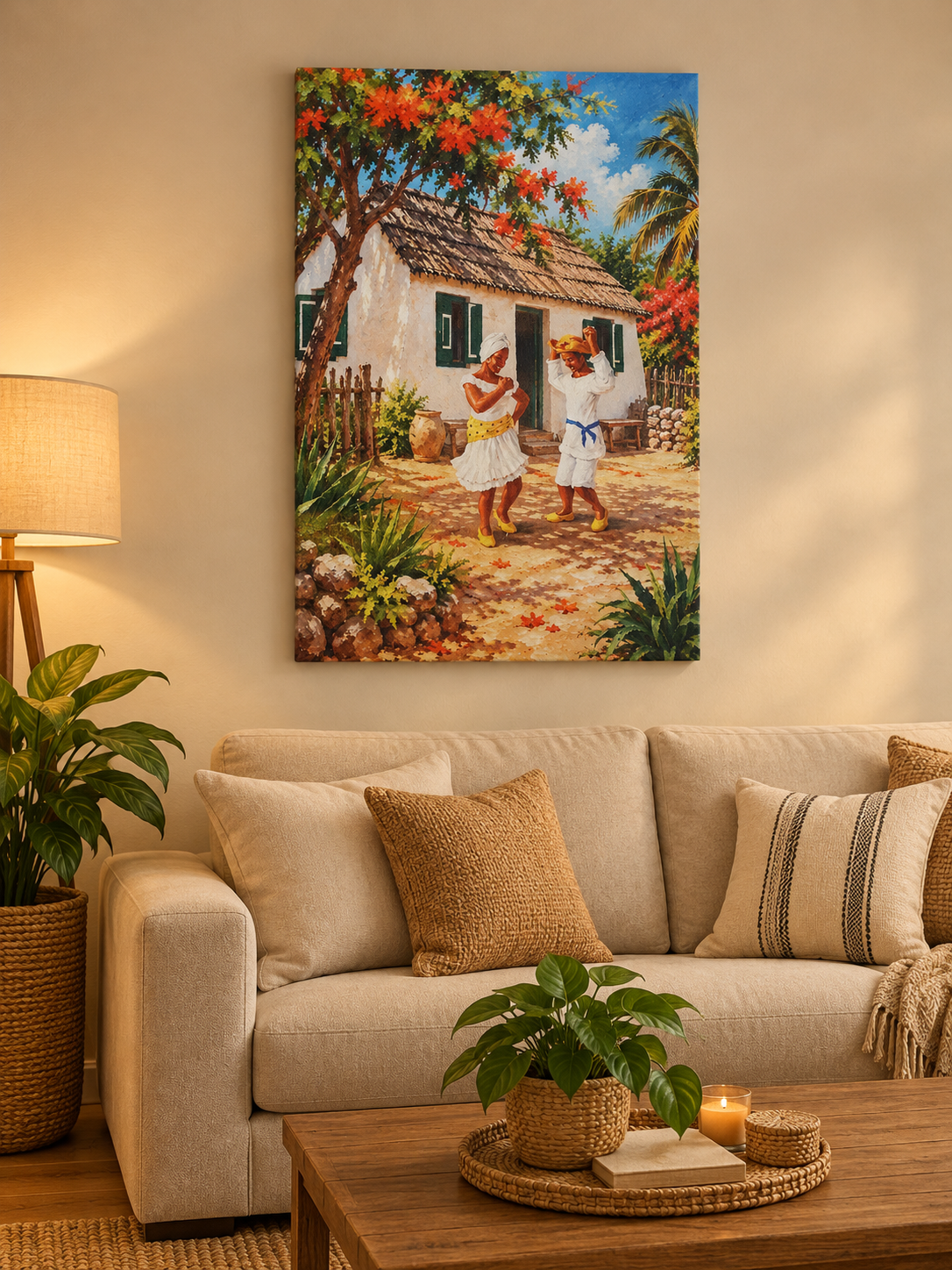
When you put the Tambú frame in your home, you don't just fill one wall. The Tambú painting is not only a work of art. It is a part of our history, our identity, heritage and the courage of our ancestors, who managed to keep our culture alive even in difficult times. The Tambú was born out of a past of pain, oppression and struggle for freedom. In its rhythm, our ancestors found a way to express their feelings, share their suffering, celebrate life and preserve their connection with each other. The tambú was not only a drum; he was a voice when many people did not have freedom to speak.
Tambú has become a symbol of resistance, unity and pride. Its rhythm carries the memory of a people who, despite all obstacles, continued to sing, dance and preserve their heritage.